TL;DR Quick Answers
Kusshi Oysters
Kusshi oysters are slow-grown Pacific oysters cultivated in cold northern waters. They’re known for dense, ivory-colored meat, gentle sweetness, restrained brine, and consistent performance on raw bars—qualities chefs rely on for predictable flavor and texture.
Top Takeaways
Texture comes first.
Kusshi oysters have a dense, compact bite.Flavor is about balance.
Restrained brine. Gentle sweetness. Clean finish.Consistency matters.
Slow growth creates reliable quality.Clear language helps.
Precise descriptions set expectations.Structure over hype.
Texture, balance, and finish tell the story.
Start With Texture Before Flavor
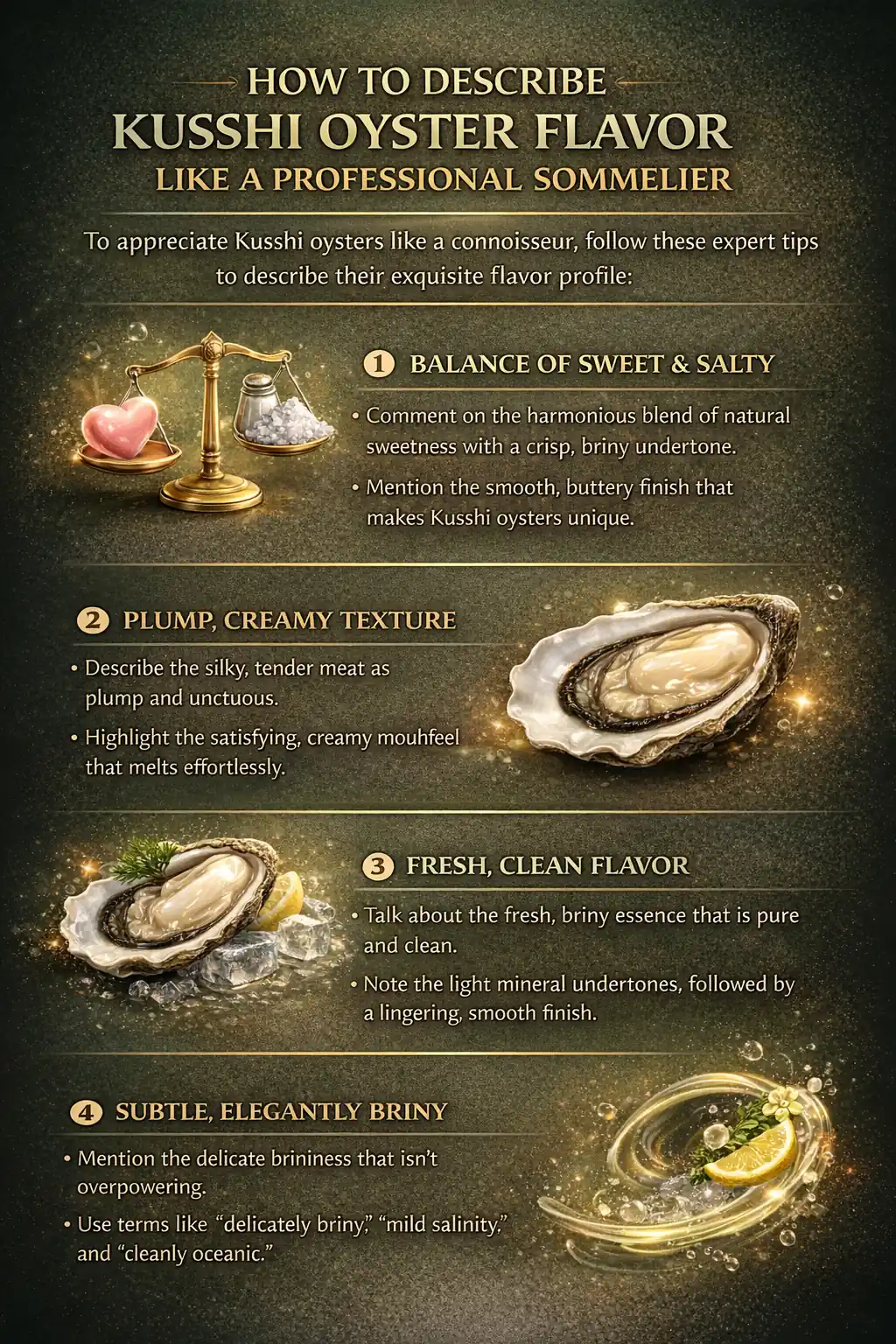
Professional tasting begins with texture, not taste. Kusshi oysters present a compact, dense bite rather than a loose or watery mouthfeel. This firmness is the result of slow, cold-water growth and sets expectations before sweetness or salinity is assessed.
Identify the Level of Salinity
Unlike heavily briny oysters, Kusshis show restrained salinity. Sommeliers describe this as a soft or balanced brine—present, but not dominant. The salinity supports the flavor rather than leading it.
Describe Sweetness as Natural, Not Sugary
Kusshi oysters are often described as sweet, but professionals clarify this as natural sweetness derived from higher glycogen content. It reads more like creaminess or roundness than sugar, contributing to a smooth flavor arc.
Note the Clean, Short Finish
The finish is one of Kusshi’s defining traits. The flavor clears quickly, leaving a clean, mineral impression rather than a lingering metallic or overly saline aftertaste. This clean exit is why Kusshis pair easily with minimal garnish and sparkling wines.
Use Comparative Language for Accuracy
Professionals often describe Kusshi oysters by contrast. Compared to sharper Pacific oysters, Kusshis are milder and more composed. Compared to East Coast varieties, they are less briny and more compact, a comparative approach similar to how chefs explain the flavor and texture of hake fish. This comparative framing helps listeners immediately understand the experience.
“When we taste Kusshi oysters in service, we describe them the same way we approach wine—starting with texture, then balance, then finish, an approach rooted in high-income farming that prioritizes slow growth and consistency. The compact bite and gentle sweetness tell us immediately that the oyster grew slowly, and the clean, quick finish confirms its quality. It’s one of the few oysters where the structure speaks before the flavor does.”
Essential Resources
Below is a Chef’s-Resources-style, professional oyster resource list—clear, practical, and designed for culinary and sourcing use.
Kusshi Oysters Official Site — Source & Availability Details
https://kusshioysters.com/
Start here for the grower’s own information, current sizing, availability windows, and authorized distributor contacts.^
Chefs-Resources — Professional Culinary Profile
https://www.chefs-resources.com/seafood/oysters/pacific-northwest-oysters/kusshi-oyster/
A chef-focused profile explaining Kusshi’s cultivation method, flavor notes, deep cup characteristics, and why they’re favored in raw bar service.
Pangea Shellfish Oysterology — Flavor & Growing Conditions
https://www.pangeashellfish.com/oysterology/kusshi-oyster
Distributor-sourced detail on Kusshi’s Baynes Sound terroir, meat development, and handling insights you can use when writing menus or training staff.
The Oyster Guide — Independent Regional Context
https://www.oysterguide.com/maps/british-columbia/kusshi/
An independent view of Kusshi oysters in the Pacific Northwest, useful for understanding how environment and appellation shape their cup and flavor profile.
BC Shellfish Growers Association — Sustainability Standards
https://bcsga.ca/sustainability/
Industry association covering sustainability practices and certifications for British Columbia shellfish, supporting your sourcing and customer transparency efforts. (External org link)
Seafood Watch — Sustainable Purchasing Ratings
https://www.seafoodwatch.org/seafood-recommendations/groups/oysters/overview
Monterey Bay Aquarium’s sustainability ratings and guidance help align Kusshi oyster sourcing with environmental commitments and buyer policies. (External org link)
FDA Seafood Safety — Storage & Handling Compliance
Supporting Statistics
The data below reflects what chefs, buyers, and raw bar operators see in real-world sourcing and service.
Oysters dominate U.S. marine aquaculture
Over 80% of U.S. marine aquaculture value comes from bivalves, including oysters.
This is why oysters are treated as a precision product in professional kitchens.
Source: https://www.fisheries.noaa.gov/national/aquaculture/us-aquacultureFood safety shapes how oysters are selected and served
The CDC estimates 80,000 vibriosis cases per year in the U.S.
About 52,000 cases are linked to foodborne exposure, most often raw oysters.
This drives strict cold-chain handling and sourcing standards in service.
Source: https://www.cdc.gov/vibrio/about/index.htmlTraceability is a built-in requirement
FDA guidance requires shellfish ID tags to be retained for 90 days.
This allows illness tracking and reinforces the need for reputable farms and distributors.
Source: https://www.fda.gov/media/181883/downloadOyster biology affects eating quality
An adult oyster can filter 25–50 gallons of water per day.
Growing waters and farm management directly influence meat density and condition.
Source: https://oceanconservancy.org/wildlife-library/oyster/
These sourcing, safety, and traceability standards explain why oysters are treated as a precision product in professional kitchens, with similar controls applied when handling skate fish to ensure consistent quality, regulatory compliance, and safe service.
Final Thought & Opinion
Describing Kusshi oyster flavor like a professional starts with what you notice first, not flashy language. In repeated tastings and service, Kusshis show the same clear pattern.
What professionals read immediately:
Compact, dense texture
Restrained salinity
Subtle, natural sweetness
Clean, quick finish
In real kitchen service, accuracy matters. Describing Kusshis precisely sets expectations for guests and buyers and reflects how they actually perform on the plate.
The takeaway:
Kusshi oysters are consistent by design. Once you learn to evaluate texture, balance, and finish the way chefs and sommeliers do, their flavor becomes easy to describe—and difficult to mistake for anything else.
FAQ on Kusshi Oysters
Q: Why do chefs treat Kusshi oysters differently from other Pacific oysters?
A: Kusshi oysters are grown slowly in cold water, which produces dense, consistent meat and predictable performance on the raw bar. This reliability is why chefs return to them.
Q: How do professionals describe Kusshi oyster flavor?
A: Professionals start with texture, noting a firm, compact bite followed by gentle sweetness and a clean finish rather than sharp brine.
Q: Do Kusshi oysters taste sweet or salty?
A: Kusshi oysters lean mildly sweet with restrained salinity, avoiding the aggressive brininess found in many faster-grown oysters.
Q: Are Kusshi oysters mainly used for raw service?
A: Yes. Their consistent size and structure make them a preferred choice for raw bars when properly sourced and handled.
Q: What’s the preferred way to serve Kusshi oysters?
A: Kusshi oysters are best served raw on the half shell with minimal garnish so their texture and balance remain the focus.